Phone: 13998888889
Email: 8888888@qq.com

Three major mechanisms of stem cells in improving diabetes: lowering blood sugar, protecting blood vessels, and resisting complications
2025-10-12 10:13:42
78
It is understood that the most common cause of death in diabetes is actually vascular complications - blood that has been in a high-sugar state for a long time will continuously damage the endothelial cells of the patient's blood vessels, causing microvascular disease (nephropathy, retinopathy, etc.) or macrovascular disease (atherosclerosis, heart disease, etc.), which in turn is more likely to lead to major diseases such as heart failure, stroke, venous and arterial thrombosis, cardiomyopathy, etc., posing a serious threat to the patient's life.

Mechanism of stem cell-mediated protection of vascular endothelium
On June 17, 2022, a study published in the internationally authoritative journal "Stem Cell Research & Therapy" confirmed that mesenchymal stem cells (MSCs) not only reduce blood glucose levels but also protect vascular endothelium from diabetic damage through a paracrine mechanism mediated by MAPK/ERK signaling, demonstrating great potential in the treatment of diabetic vascular complications.
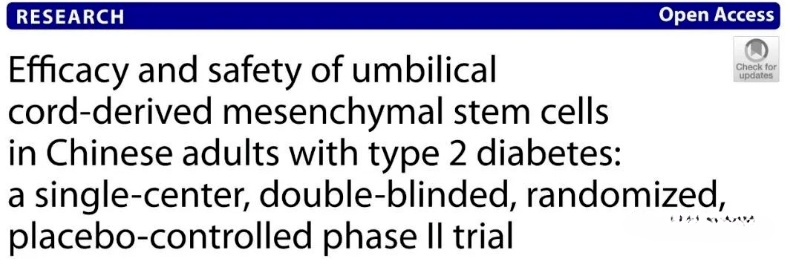
Endothelial damage is the primary cause and initial event of most diabetic vascular complications. For instance, in diabetes-induced nephropathy, endothelial damage can trigger nodular glomerulosclerosis, thickening of the glomerular basement membrane, and mesangial expansion, ultimately leading to a decrease in glomerular filtration rate. Therefore, endothelial damage has always been regarded as an important target in the treatment of diabetic vascular complications.
Currently, there are few drugs specifically targeting vascular complications. Commonly used drugs such as metformin, sulfonylureas, and thiazolidinediones (glitazones) all target glycemic homeostasis to indirectly repair blood vessels. Not to mention their limited efficacy, these drugs also commonly have side effects.
Due to the tissue repair and angiogenic capabilities of stem cells, the research team proposed a hypothesis that stem cells can restore diabetes-induced endothelial damage through paracrine effects.
To verify this, scientists treated rat diabetes models and human endothelial cell (HUVEC) cell models with human umbilical cord-derived mesenchymal stem cells (hucMSCs), and found that:
Stem cells can lower blood sugar, repair damaged vascular endothelium, and protect vascular endothelium through paracrine mechanisms.
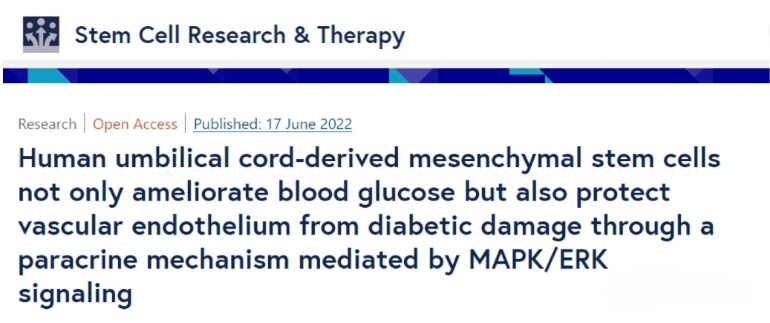
This experiment is the first to determine the efficacy and mechanism of hucMSCs on vascular endothelial diabetes injury, and incidentally verifies its hypoglycemic effect. The researcher stated, "Stem cell therapy is a prospective strategy for the clinical treatment of diabetic vascular complications."
Stem cell technology brings hope for curing diabetes
Stem cell technology is currently a popular research direction in the field of diabetes. As early as 2010, research teams discovered that stem cells can improve blood glucose levels in patients with type 1 and type 2 diabetes, and this finding has since been supported by a large number of experimental results. In May 2021, Mass General Brigham ranked the technology of "stem cell therapy for diabetes" as one of the Top 12 "disruptive technologies".
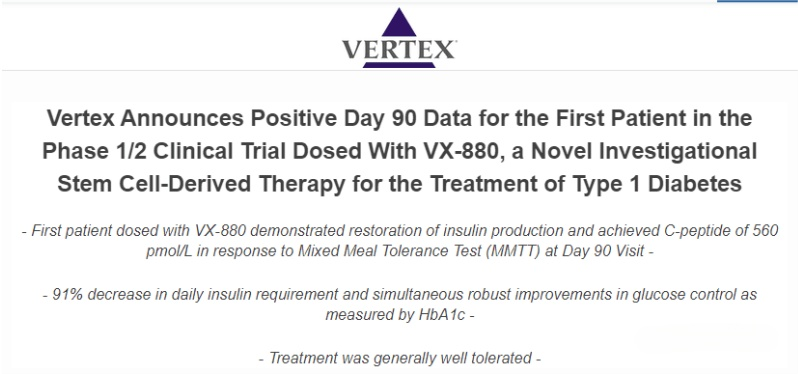
On October 18, 2021, biotechnology giant Vertex announced that they had treated a patient who had suffered from type 1 diabetes for 40 years with islet β cells derived from allogeneic stem cells (VX-880 therapy). After 270 days of transplantation, the patient, who had originally suffered from "islet dysfunction," had completely stopped using insulin.
Scientists analyze that this is primarily attributed to the homing ability and paracrine function of stem cells. These two factors enable stem cells to autonomously migrate to the damaged site and release extracellular vesicles, growth factors, cytokines, etc., thereby regulating immune responses, repairing damage, and even promoting the regeneration of pancreatic β cells to a certain extent.
For example, growth factors (IGF-1, HGF, and VEGF) can stimulate cell proliferation and tissue remodeling, while secreted anti-inflammatory factors (IL-10 and IL1-RA) can inhibit local inflammation.
Research has shown that stem cell therapy has significant effects on treating various complications of diabetes, opening up a new path to healing for all those who are shrouded in the shadow of diabetes.
Latest articles

Akıllı sağlık neden bir zamanlar olacak?
42
2025-12-09




The efficacy and function of human stem cells
80
2025-09-18

